Why the Color of Roofing Materials Matters in Austin, TX

Why the Color of Roofing Materials Matters in Austin, TX
When Austin homeowners and commercial property owners choose new roofing, color is usually treated as a curb appeal decision. But in Central Texas's climate, roofing color isn't just a cosmetic detail. It's a performance variable that directly affects how hot your building gets, how hard your HVAC system works, how quickly your roofing materials age and how long your roof lasts before it needs replacement.
Making an informed color choice, one that accounts for Austin's specific climate rather than general aesthetic preferences, can meaningfully reduce your energy costs, extend your roof's service life and protect your investment for years longer than a color selected without that context.
Here is what Central Texas property owners need to understand about how roofing color works and why you have to think about more than matching the building or home's architectural style.
How Roofing Color Affects Heat Absorption
The relationship between color and heat is straightforward physics. Dark colors absorb more sunlight and convert it to heat. Light colors reflect more of it away. This principle, measured in roofing as the Solar Reflectance Index (SRI), has consequences that are amplified considerably in Austin's hot climate.
The sun in Central Texas is not the same as in milder regions. Austin has approximately 228 sunny days per year, significantly above the national average. The summer UV intensity regularly reaches the "very high" to "extreme" range. During peak summer afternoons, unless you have cool roof shingles, a dark-colored asphalt shingle roof in Austin can reach surface temperatures of 170°F or higher.
A comparably installed light-colored or white roofing surface under identical conditions may reach 110°F to 120°F. That's a difference of 50 to 60 degrees on the same day, on adjacent roofs, under the same sun.
That temperature gap is not just a number. It drives every downstream consequence of roofing color in Austin's climate: energy efficiency, material degradation, attic heat loading and roof system longevity.
Roof Color and a Building or Home's Energy Efficiency in Austin, Texas
Austin summers are long and intense. The cooling season effectively runs from May through October, and during peak months, residential and commercial HVAC systems in Central Texas work harder than virtually anywhere else in the country. The city's municipal utility, Austin Energy consistently identifies roof-driven heat gain as one of the primary contributors to peak summer energy demand across its service territory.
The connection is direct: a dark roof absorbs solar radiation, converts it to heat and radiates that heat downward into the attic space below. Attic temperatures beneath a dark roof in Austin can reach 150°F to 160°F on a hot summer afternoon. That superheated air radiates through the ceiling insulation into the living space below, raising the interior temperature and forcing the HVAC system to run longer and harder to maintain the thermostat setpoint.
A lighter roof color reduces this heat transfer significantly. By reflecting more of the incoming solar radiation before it can be converted to heat, a light-colored roof keeps attic temperatures lower. Independent research and field measurements have consistently found that switching from a dark to a light or reflective roof surface can reduce attic temperatures by 20 to 40°F under peak Austin summer conditions. For a home or commercial building with typical ceiling insulation, that translates to a measurable reduction in cooling energy consumption, commonly estimated at 10-30% of peak summer cooling costs.
Austin Energy recognizes this in its energy efficiency programs, which include incentives and recognition for qualifying cool roof installations. For commercial properties, the current Austin building energy code includes minimum solar reflectance requirements for low-slope roofing.
For Austin property owners paying significant electricity bills from June through September, roofing color is one of the few decisions at the time of a roof replacement that has a direct, measurable and ongoing impact on monthly operating costs for the life of the roof.
The Color of Your Roof and Roofing Material Longevity
The energy efficiency argument for lighter roof colors in Austin is well established. Less appreciated but equally significant for the long-term value of a roofing investment is what roofing color does to material longevity.
Asphalt shingles degrade primarily through two mechanisms: UV radiation breaking down the asphalt binder and thermal cycling, which is the repeated expansion and contraction of the material as it heats and cools. Both mechanisms are accelerated by heat, and darker shingles experience more heat than lighter ones under identical sun exposure.
Dark asphalt roofing shingles in Austin that reach 170°F in the intense summer heat experience more thermal stress than lighter-colored shingles that are around 120°F under the same sun. That 50-degree difference may seem abstract, but it compounds significantly over the 20 to 25 years that a quality asphalt shingle roof is expected to last in Central Texas. Accelerated thermal cycling causes shingles to lose their granule coating faster, become brittle earlier and develop cracking and curling sooner than the same product installed in a lighter color.
The practical consequence is that two identical shingle products installed on comparable Austin homes can have meaningfully different effective service lives based primarily on color. Industry data and roofing contractor experience in hot-climate markets consistently support the finding that dark-colored asphalt shingles in climates like Austin's tend toward the lower end of their rated service life, while lighter colors trend toward the upper end.
For metal roofing, the dynamic is somewhat different but the principle holds. Metal roofs expand and contract with temperature change, and a metal roof that reaches higher peak temperatures because of a darker color experiences greater thermal movement per cycle. Over years of cycling, this adds cumulative mechanical stress to seams, fasteners, and panel connections. Lighter metal roof colors reduce peak temperatures, reduce the per-cycle thermal movement and reduce the long-term mechanical wear on the system.
For flat and low-slope roofing membranes like TPO, EPDM and modified bitumen, the relationship between color colors and longevity is among the most clearly documented in commercial roofing research. Dark roofing membrane surfaces in climates like Austin's have been shown in peer-reviewed research to age significantly faster than equivalent light-colored or reflective surfaces, primarily due to the accelerated thermal aging of the membrane polymer under sustained high temperatures. This is one of the core technical reasons why white TPO membrane has become the dominant commercial flat roofing specification in Austin and across the Sun Belt.
What Color Roofing is Most Beneficial in Central Texas?
Given the physics and the climate data, the answer for pure thermal and energy performance in Austin points clearly toward lighter colors. White, off-white, light gray, light tan and light beige all significantly outperform dark brown, charcoal and black roofing in terms of solar reflectance, attic temperature management and material longevity under Central Texas sun. This is the case with any roofing materials from asphalt shingles to a slate roof.
For flat and low-slope commercial roofing, this is largely a settled question in the Austin market. White TPO roofing and white-coated roofing systems are the standard specification for energy-conscious commercial installations, and the combination of Austin Energy program recognition and local building code requirements reinforces this in the commercial sector.
For residential steep-slope roofing, the picture is somewhat more nuanced because homeowners balance performance with aesthetics, HOA requirements, neighborhood context and resale considerations. But the performance direction is clear - lighter is better in Austin's climate, and the gap between light and dark in Central Texas is larger than in virtually any other region.
Light to medium cool gray is among the most popular choices for Austin homeowners who want to balance solar performance with a neutral, widely appealing aesthetic. Light gray reflects significantly more solar radiation than charcoal or dark gray while fitting naturally with the limestone, painted brick and stucco walls common in Austin's residential architecture.
Weathered wood and light tan tones are a practical middle ground for homeowners whose architecture favors warmer tones. They reflect more heat than dark brown tones while complementing the cedar, warm stucco and terracotta elements common throughout Austin's established neighborhoods.
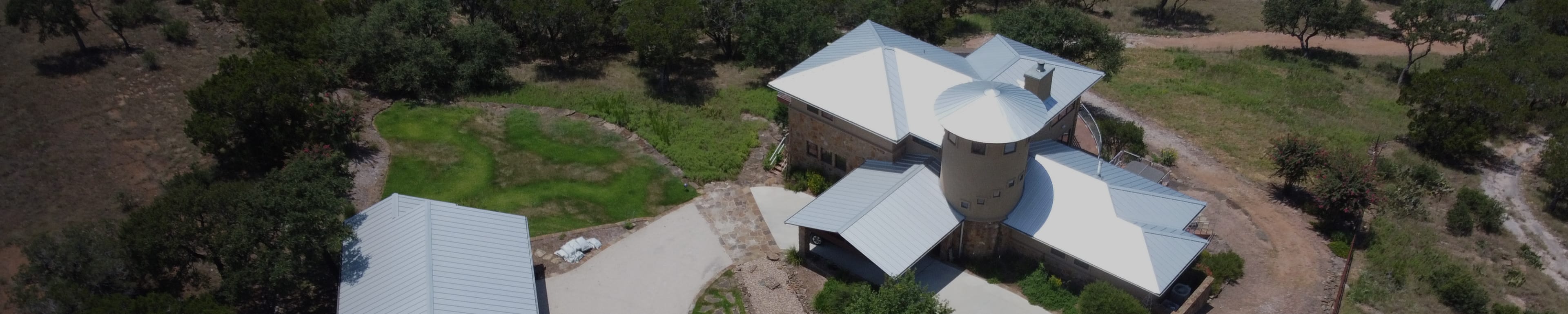
White and off-white are most commonly used in metal roofing and flat roof applications, deliver the maximum reflectance benefit and are increasingly seen on residential metal roof installations across West Austin, West Lake Hills and the contemporary custom home market where energy performance is explicitly prioritized.
Charcoal and dark roof colors are currently among the most popular shingle colors in the national market because of their sleek appearance. But they perform the worst for heat management in Austin's climate. Black, dark grey and brown roofs are not wrong choices from a purely aesthetic standpoint, but Austin homeowners selecting charcoal shingles should understand they are trading some energy efficiency and some shingle longevity for an aesthetic outcome. Pairing darker shingle colors with excellent attic ventilation, high R-value insulation and a quality radiant barrier can partially offset the thermal performance disadvantage.
Other Factors That Work With Color
Roofing color is one variable in a system of interconnected performance factors whether you have architectural shingles, metal shingles, concrete tiles or any other roofing material. Getting the most out of a lighter roof color in Austin requires the supporting system to be in good shape as well.
Adequate attic ventilation determines how quickly the heat that does reach the roof deck is removed from the attic space. Even a light-colored roof will contribute to heat buildup if there isn't proper attic ventilation. Proper intake and exhaust ventilation works with color to keep attic temperatures in a manageable range.
Insulation is the barrier between attic heat and living space. Austin Energy recommends R-38 to R-60 for attic insulation in Central Texas. Light roof color reduces the heat load that insulation must manage, and adequate insulation levels prevent what heat does accumulate from transferring to the living space.
Radiant barriers are reflective foil products installed on attic rafters that add a third line of defense against radiant heat transfer from the roof deck. They work best in combination with reflective roofing surfaces and proper ventilation.
None of these factors replace the benefit of appropriate roofing color in Austin's climate, but they compound it. A light-colored roof over a well-ventilated, well-insulated attic performs substantially better than any individual improvement alone.
Making the Right Choice For Your Austin Roof
The best roofing color for your Austin property depends on your performance priorities, your roofing material and your architecture. Personal preference plays a role, but it's important to remember that roof color affects resale value and maintenance costs because it plays a role in the longevity of the roofing system.
What the data makes clear is that in Central Texas's climate, lighter colors deliver measurably better energy efficiency, longer material life and a lower total cost of ownership over the life of the roof.
If you are planning a roof replacement and want a clear-eyed assessment of how material and color choices will affect performance, energy costs and longevity for your specific property, LOA Roofing & Construction offers free roof inspections and honest guidance with no obligation.
Call us at (512) 375-3654 🌐 Visit us online to schedule a free roof inspection.
Back to Blog