Types of Roof Coating That Are Well-Suited For Central Texas
Types of Roof Coating That Are Well-Suited For Central Texas
If you own a home or commercial property in Austin, you deal with environmental factors that can shorten your roof's lifespan. Summer afternoons push roof surface temperatures past 170°F. UV radiation is intense enough to visibly degrade roofing materials within a few years. Spring and fall storm seasons deliver wind-driven rain and hail.
Roof coatings have become one of the most cost-effective tools Central Texas property owners have for extending roof life, improving energy savings and reinforcing existing systems against this climate's specific stresses. But not every coating performs equally here, and selecting the right product for your roof type and priorities makes a significant difference in the results.
If you want to know more about the types of roof coating that are well-suited for Central Texas we've broken down what each one does, why it works in Austin's climate and which roof systems the coating is designed for so you have a better idea of what's best for your property.
Request an Appointment!A Quick Note on What Roof Coating Solutions Can and Cannot Do
A roof coating is a fluid-applied membrane that's rolled, sprayed or brushed onto an existing roof surface. It cures into a continuous, seamless layer providing some combination of waterproofing, UV protection and solar reflectance. The right coating can meaningfully extend the time that's needed for a roof replacement by reducing heat absorption and protecting it from UV rays and thermal cycling that are the primary aging forces in Central Texas.
What coatings cannot do is fix a roof that has already failing structurally. Applied over wet insulation, delaminated membrane or active damage, a roof coating conceals problems temporarily while they worsen underneath. A professional roof inspection before any coating application is essential.
Silicone Roof Coating
What it is: A single-component, moisture-cured elastomeric coating applied as a liquid that cures into a flexible, durable membrane. Available in high-reflectance white formulations and primer-gray base coat versions.
Why it works in Central Texas: Silicone is arguably the most climate-appropriate roof coating for Austin. It has exceptional UV stability. Unlike acrylic coatings that can chalk and lose reflectance over time, silicone maintains its physical properties and white finish across decades of year-round UV assault.
It is inherently resistant to ponding water. Silicone is unaffected by prolonged water contact, which is a significant advantage on Austin's flat commercial roofs where drainage sometimes fails to clear water after an intense storm event. Most competing coating types soften or delaminate under standing water.
Its high solar reflectance, typically 85-90% for white formulations, directly addresses Austin's summer cooling load problem. A silicone-coated roof reflects the majority of incoming solar radiation rather than absorbing it. Austin Energy recognizes qualifying cool roof coatings in its energy efficiency programs, and silicone coatings with high solar reflectance index (SRI) ratings typically qualify.
Finally, silicone remains flexible across Austin's full temperature range from sub-freezing conditions during winter storm events to peak Texas heat in the summer. It can bridge small cracks and accommodate the thermal movement of the roof assembly without delaminating.
Best suited for: Low-slope and flat roofs including TPO roofing, EPDM, built-up roofing (BUR), metal roofing and modified bitumen roofs. Not typically used on steep-slope asphalt shingle roofs, where its surface can create traction hazards during future roofing work.
Austin note: Silicone attracts airborne dirt more readily than acrylic over time, which can gradually reduce reflectance. Properties near Austin's construction zones or high-traffic corridors may see faster surface soiling that can be restored with a periodic light wash.
Acrylic Roof Coating
What it is: Acrylic roof coating is a water-based elastomeric coating made from acrylic polymers. One of the most widely used and cost-accessible coating options, available in white and tinted formulations for a range of substrates.
Why it works in Central Texas: White acrylic coatings typically achieve solar reflectance ratings of 80-88%, qualifying for Austin Energy's cool roof rebates and reducing summer cooling loads on commercial buildings across the metro. Acrylic also retains its reflective performance well under sustained UV exposure when applied at adequate thickness — making it a practical option for restoring reflectance on aging dark-membrane flat roofs.
For metal roofing, acrylic formulations accommodate the thermal expansion and contraction that Austin's temperature extremes impose on metal panels, and can be formulated with rust-inhibiting primers to address the surface oxidation that develops on aging metal roofs in humid conditions.
Limitations in Austin: Acrylic's primary limitation here is its vulnerability to ponding water. Sustained standing water softens cured acrylic, reduces adhesion, and can cause blistering and delamination over time. For flat roofs with reliable drainage, acrylic performs well. For those with chronic ponding — a real subset of Austin's older commercial inventory — silicone or polyurethane is the better choice.
Acrylic also needs dry conditions to cure, which requires careful scheduling around Austin's spring storm season, where afternoon thunderstorms can arrive with limited warning.
Best suited for: Metal roofing, modified bitumen, BUR and flat roof surfaces with adequate drainage. Also used as a top coat over spray polyurethane foam (SPF) roofing systems.
Polyurethane Roof Coating
What it is: A two-component or moisture-cured coating that cures into a hard, durable film with high tensile strength. Most roofing systems use an aromatic polyurethane base layer for waterproofing and an aliphatic top coat for UV protection.
Why it works in Central Texas: Polyurethane's primary advantage in Austin applications is its exceptional resistance to physical abuse. Commercial rooftops across the metro see regular foot traffic from HVAC technicians, electricians and other trades. Acrylic and silicone are effective water barriers but relatively soft. Polyurethane's hardness and abrasion resistance make it the preferred coating where rooftop traffic is a known condition.
Polyurethane also performs well in ponding water, and its high elongation properties allow it to bridge cracks and accommodate metal roofing's thermal movement under Austin's temperature swings. The aliphatic top coat provides strong UV stability, maintaining the system's reflective performance and preventing chalking under Central Texas sun.
Best suited for: Metal roofing where foot traffic is a concern, SPF roofing as a protective and reflective top coat and high-traffic commercial flat roofs. Note that two-component application requires specific equipment and expertise so verify that any Austin contractor you consider has specific experience with polyurethane coating systems.
Elastomeric Roof Coating
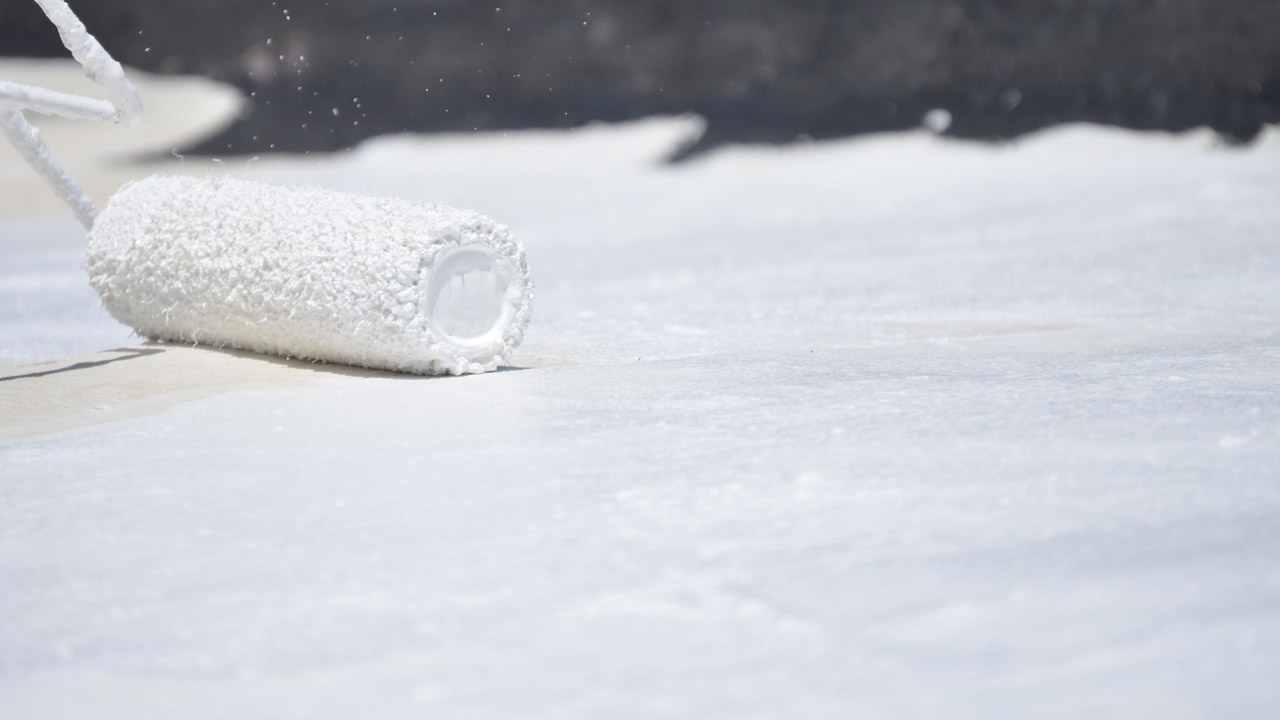
What it is: "Elastomeric" describes coatings that maintain rubber-like flexibility after curing. In common Austin market usage, it typically refers to high-build acrylic elastomeric products formulated specifically for steep-slope metal roofing and some flat roof applications.
Why it works in Central Texas: The defining performance characteristic of elastomeric coatings in this climate is their ability to accommodate movement without cracking. Austin roof surfaces experience daily and seasonal thermal cycles that cause metal and asphalt substrates to expand and contract repeatedly. A brittle coating cracks at these movement points, creating water entry points. Elastomeric coatings stretch with the substrate and return to their original dimensions, maintaining a continuous waterproof film across the full temperature range.
For metal roofing, elastomeric coating is the standard restoration product. It bridges the lap seams of exposed fastener systems where sealant has aged, reinforces standing seam connections and provides a reflective finish that dramatically reduces the UV and thermal load on the metal panel.
High-build formulations applied at 20 to 30 mils dry film thickness provide meaningful crack-bridging capability on aged modified bitumen and BUR surfaces where UV-driven surface cracking is one of the most common deterioration patterns in Austin.
Best suited for: Steep-slope and low-slope metal roofing, modified bitumen and BUR flat roofing and concrete roof deck surfaces. Widely used as a restoration coating on agricultural and rural properties throughout the Hill Country, where periodic elastomeric restoration is a standard maintenance practice on corrugated and standing seam metal roofs.
Aluminum-Based Reflective Coating
What it is: A solvent-based product combining fine aluminum flakes in an asphalt or fibered asphalt base. Applied coatings orient the aluminum flakes parallel to the surface, creating a metallic, reflective finish.
Why it works in Central Texas: Aluminum coating is one of the most established maintenance coatings on asphalt-based roofing in the Austin market. Particularly on the modified bitumen and BUR systems common on older commercial buildings throughout Airport Boulevard, East 6th Street and South Lamar.
Its primary benefit is UV protection for the asphalt substrate beneath it. Asphalt oxidizes and becomes brittle under Central Texas sun exposure. Aluminum coating reflects a portion of incoming UV radiation before it reaches the asphalt, slowing oxidation and extending the service life of the underlying system. It also has a modest solar reflectance improvement over uncoated dark asphalt, even if lower than white silicone or acrylic options.
Best suited for: BUR and modified bitumen surfaces as a maintenance and UV-protection coating. Also used on steep-slope asphalt surfaces and metal flashings. Aluminum coating is most appropriately a maintenance product applied to a sound existing surface — not a primary waterproofing or full system restoration solution.
Request an Appointment!Spray Polyurethane Foam (SPF) With Protective Top Coat
What it is: This coating is sprayed as a two-component liquid that expands and cures into a rigid, closed-cell foam adhered directly to the existing roof substrate. Because SPF is UV-vulnerable and mechanically soft on its own, it requires a protective top coat, typically silicone or acrylic, applied over the cured foam.
Why it works in Central Texas: SPF with a reflective top coat addresses two of Austin's most significant roofing challenges simultaneously: thermal performance and waterproofing continuity. The closed-cell foam provides a seamless insulation layer that eliminates the thermal bridging common in assembly-based insulation systems. Combined with a white silicone top coat, it delivers both high R-value and high solar reflectance in a single installation, which offers valuable for Austin commercial properties where summer cooling costs are substantial.
SPF is also self-draining: the contractor shapes the foam during application to create positive slope toward drains, addressing the drainage deficiencies that plague older Austin flat roofs without requiring structural modification.
Its seamless nature, adhering continuously to all existing penetrations, edges and irregular surfaces, eliminates the transition details at drains, penetrations and parapet walls that are the most common failure locations on conventional flat roof systems.
Best suited for: Existing flat and low-slope commercial roofs where both insulation improvement and waterproofing restoration are needed together. Particularly effective for Austin commercial properties with complex roof lines, heavy penetration patterns or drainage problems that are difficult to solve with a conventional membrane. Note that the protective top coat requires reapplication every 10 -15 years to maintain UV protection.
Choosing the Right Coating For Your Austin Property
The right roof coating depends on your existing system, your primary performance goal and your roof's drainage characteristics. A few general principles for the Austin roof coating services:
- • Flat roofs with reliable drainage: White silicone or acrylic elastomeric coating delivers the best solar reflectance and waterproofing. Silicone is the premium choice; acrylic is cost-effective where ponding is not a concern.
- • Flat roofs with chronic ponding: Silicone is the appropriate choice. It's the only elastomeric coating that maintains performance in sustained standing water.
- • Metal roofing: Elastomeric acrylic or polyurethane coating restores reflectance, bridges aged seams and protects panels from the UV and thermal cycling that accelerates metal roof aging in Central Texas.
- • Older BUR and modified bitumen: Aluminum coating offers cost-effective UV protection as a maintenance product. Silicone or high-build elastomeric provides more comprehensive restoration on weathered systems.
- • Commercial roofing systems that need both insulation and waterproofing improvement: SPF with a silicone top coat addresses both simultaneously while correcting drainage deficiencies.
Line Up a Free Inspection Before Roof Coating Services
Roof coatings deliver their best results when the existing roof has been honestly evaluated, properly prepared and correctly specified. In Austin's competitive market, it pays to work with a contractor who assesses your roof thoroughly, recommends the right system for your specific conditions and applies it with the surface preparation and quality control that determines whether a coating lasts 5 years or 20.
If you are considering a roof coating or simply want to understand the current condition of your roof, LOA Roofing & Construction offers free, no-pressure inspections with honest recommendations. Call today or schedule a free inspection online.
Central Texas Roof Coating Quick Guide
| Coating Type | What It Is | Why It Works in Central Texas | Best Applications | Key Limitations |
| Silicone | Moisture-cured, single-component elastomeric coating | Superior UV resistance, maintains reflectivity long-term, handles ponding water, high solar reflectance (85–90%) | Flat & low-slope roofs (TPO, EPDM, BUR, metal, modified bitumen) | Attracts dirt over time, can reduce reflectivity |
| Acrylic | Water-based elastomeric coating | High reflectivity (80–88%), cost-effective, good UV performance, works well on metal roofs | Metal roofing, flat roofs with good drainage, SPF top coat | Fails under ponding water, requires dry conditions to cure |
| Polyurethane | Two-component or moisture-cured durable coating | High impact and abrasion resistance, ideal for heavy foot traffic, strong waterproofing | High-traffic commercial roofs, metal roofs, SPF systems | More complex installation, higher cost |
| Elastomeric (General) | Flexible, rubber-like coating (often acrylic-based) | Expands/contracts with temperature swings, excellent crack-bridging | Metal roofs, BUR, modified bitumen, concrete surfaces | Performance depends on formulation (often shares acrylic limitations) |
| Aluminum-Based | Asphalt-based coating with reflective aluminum flakes | Protects asphalt from UV degradation, slows oxidation, cost-effective maintenance | BUR, modified bitumen, asphalt roofs, metal flashings | Lower reflectivity than white coatings, not a full waterproofing solution |
| SPF + Top Coat | Spray foam insulation system with protective coating (silicone/acrylic) | Adds insulation + waterproofing, seamless, improves drainage, high energy efficiency | Flat/low-slope commercial roofs with drainage or insulation issues | Requires recoating every 10–15 years, specialized installation |
- • How Much Does A New Roof Cost?
- • What Questions Do I Need to Ask My Insurance Provider?
- • 12 Common Roofing Problems and How to Prevent Them
- • 9 Benefits of Regular Roof Cleaning
- • Common Roofing Terms
- • Common Roofing Mistakes
- • How Humidity Affects Your Roof During Winter
- • What Happens at a Roof Inspection?
- • What is the Best Time of Year to Install a Roof?
- • 10 Tips for Choosing a Roofing Company
- • Need An Emergency Roof Fix? What To Look For When Hiring A Company To Fix Your Roof
- • Roof Estimate
Back to Blog
Post navigation

Choose quality roofing for a lasting investment in your home.
Request an InspectionDedicated to excellence, our Austin roofing company ensures quality in every project. Contact our skilled Central Texas roofers for a same-day, hassle-free inspection. Call +1 (512) 375-3654 to book your free inspection.